Counter, Bar, Spectator: Three Heights and Why People Buy the Wrong One
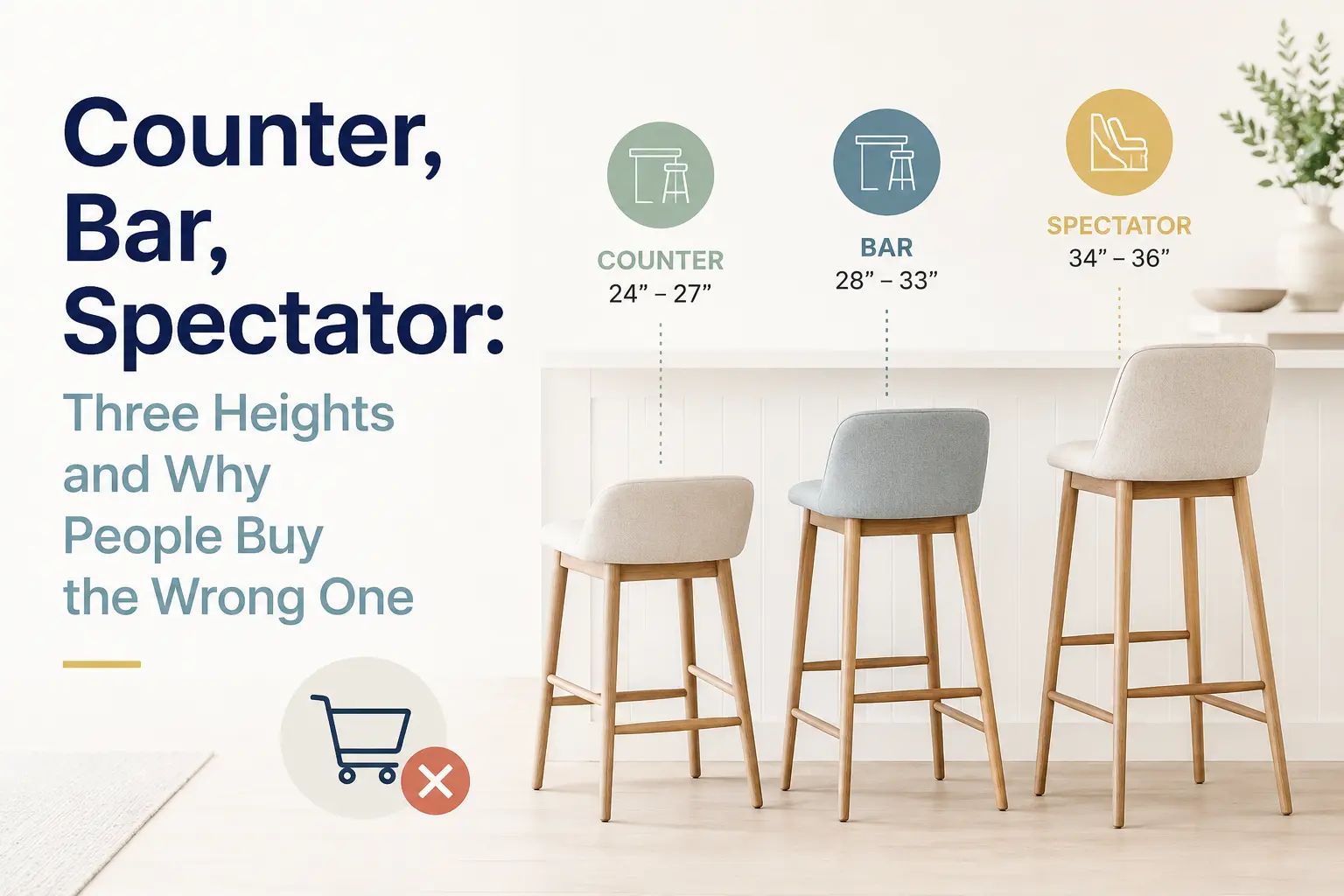
Three stools sit in a showroom, and to an untrained eye, they look like the same chair in three sizes. They are not interchangeable. Each one is engineered for a specific surface height, and pairing the wrong stool with a surface produces a seat that is either a clamber or a slump, every time someone uses it. The mistake is common, and it is almost always made at the moment of ordering, not the moment of sitting.
The reason buyers get it wrong is that they shop by appearance and order by guess, when the decision is really a matter of measurement. Get the surface height and the seat height to agree and the seating disappears into comfort. Get them out of step and the room fights its guests all night. Before ordering anything like swivel bar stools with backs, it pays to know exactly which of the three heights the surface actually calls for.
The Rule That Governs All Three
There is a single principle underneath every height pairing, and once it is clear, the rest is arithmetic. A comfortable seat sits roughly ten to twelve inches below the surface it serves. That gap gives the legs room to fold under the surface and the forearms room to rest on top of it without the shoulders hunching.
Every standard height below is just that rule applied to a common surface. Memorize the gap, measure the surface, and the correct seat height follows. Buyers who skip the measurement and trust the showroom label end up with a stool an inch and a half off, which is enough to make every guest fidget.
Counter Height: The Everyday Workhorse
Counter height is the most common pairing in homes and fast-casual rooms, and it serves a surface that runs about thirty-six inches tall, the standard kitchen and service-counter height. The seat that fits it sits roughly twenty-four to twenty-six inches off the floor.
This is the height people buy correctly most often, simply because thirty-six inches is the surface they know from their own kitchens. The trouble starts when a buyer assumes every elevated surface is this height. It is not, and a counter stool pushed up to a true bar leaves the guest’s chin near the rail with their feet dangling.
Bar Height: The One Everyone Defaults To
Bar height serves the taller surface, generally around forty-two inches, the standard for a commercial bar rail. The seat that matches it sits about 28 to 30 inches off the floor, 4 to 6 inches higher than its counter-height cousin.
This is the height buyers reach for on reflex because the word “stool” makes them picture a bar. The error runs the other way here: a bar stool ordered for a thirty-six-inch counter perches the guest too high, knees crammed against the underside, reaching down to the surface. The fix is never the furniture after the fact. It measures the surface before the order.
Spectator Height: The One Most People Have Never Heard Of
Spectator height is the tallest of the three and the least understood, which is exactly why it gets bought by mistake or skipped when it is needed. It serves the raised surfaces that run around forty-eight inches: gaming counters, raised bar overhangs, and the tall spectator ledges that give the height its name. The seat sits roughly thirty-two to thirty-four inches off the floor.
Most buyers do not know this height exists, so they force a bar stool onto a forty-eight-inch surface and wonder why guests look stranded. The understanding of these heights traces back to anthropometry, the measurement of the human body, which is what sets the comfortable seat-to-surface relationship in the first place. The tall surface needs the tall seat. There is no shortcut around the extra inches.
A Field Guide to Matching Seat to Surface
For anyone ordering without a tape measure handy, the pairings reduce to a short, memorizable list.
- A 36-inch counter requires a counter stool with a seat height of around 24 to 26 inches.
- A 42-inch bar takes a bar stool with a seat around 28 to 30 inches.
- A 45 to 46-inch spectator surface takes a spectator stool with a seat around 33 to 34 inches.
- When unsure, measure the surface and subtract 10 to 12 inches to find the right seat height.
Carry that list into the buying decision and the most common ordering error simply cannot happen. The numbers do the work that guessing fails at.
Why the Right Height Is Really a Comfort Decision
Behind the measurements lies the real reason any of this matters: the body in the seat. The correct gap keeps the spine in a neutral spine posture, feet supported, weight settled, no part of the frame straining to reach the surface. The wrong gap forces the body to compensate, and a guest who has to compensate leaves sooner.
So the lesson is not really about three-stool labels. It is that seating comfort is determined at the order screen, based on whether the buyer measured the surface or relied on a guess. People buy the wrong height because they shop with their eyes when the answer lies in a tape measure. Measure the surface, apply the gap, match the seat, and the stool does its one job perfectly: to vanish under a comfortable guest who never thinks about it again.